From Blueprint to Build: AI Tools Every Construction Professional Should Know
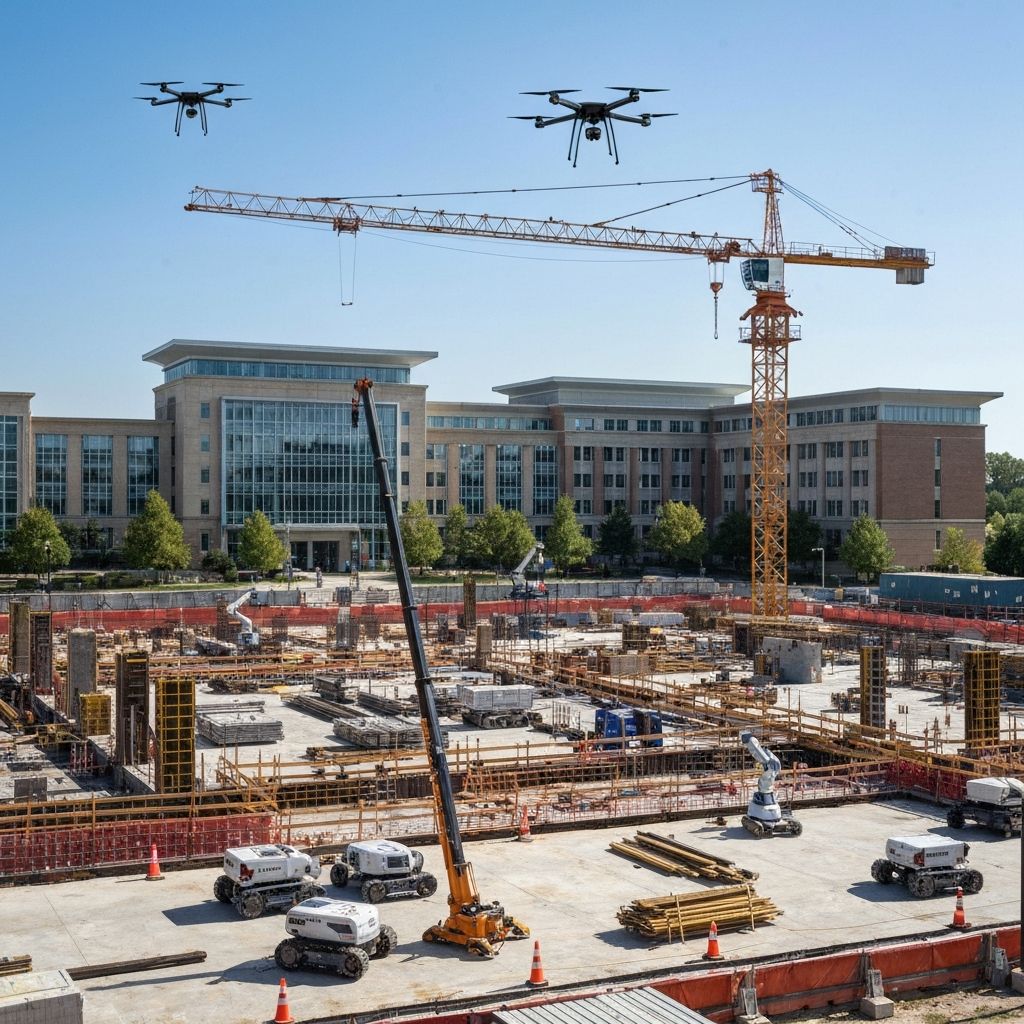
The construction industry stands at a pivotal crossroads. While traditional building methods have served us for centuries, artificial intelligence is ushering in a new era of precision, efficiency, and safety. For construction professionals—from project managers to architects, engineers to field supervisors—AI is no longer a futuristic concept but a practical toolkit transforming daily workflows. Let's explore the AI technologies that are reshaping how we build.
Industry Impact
Construction firms adopting AI tools report 25% reduction in project delays, 30% improvement in cost estimation accuracy, and 45% decrease in safety incidents.
AI-Powered Design and Planning
The planning phase traditionally required weeks of manual calculations, iterative design reviews, and coordination meetings. AI is compressing this timeline while improving outcomes. Generative design tools now explore thousands of design alternatives in hours, optimizing for cost, structural integrity, energy efficiency, and aesthetic appeal simultaneously.
BIM (Building Information Modeling) platforms enhanced with AI capabilities can automatically detect clashes between mechanical, electrical, and plumbing systems before construction begins. These systems learn from millions of previous projects to suggest optimal routing for ductwork, identify potential constructability issues, and even recommend material substitutions based on current supply chain conditions and cost fluctuations.
Design Optimization
- • Autodesk Revit with AI plugins
- • TestFit for site analysis
- • Spacemaker for urban planning
- • Hypar for parametric modeling
Clash Detection
- • Navisworks with ML modules
- • BIM 360 Design coordination
- • Trimble Connect with AI insights
- • Solibri for automated checks
Intelligent Project Management
Project management in construction involves juggling countless variables: labor schedules, material deliveries, weather conditions, regulatory approvals, and subcontractor coordination. AI-powered project management platforms are becoming indispensable for keeping projects on track and within budget.
These systems use machine learning to predict potential delays before they occur by analyzing historical project data, current weather forecasts, labor availability, and supply chain dynamics. When a concrete pour is scheduled but weather patterns suggest rain, the AI can automatically alert stakeholders and suggest optimal rescheduling windows. When labor shortages are detected in specific trades, predictive systems can recommend proactive hiring or task resequencing.
Cost estimation has also been revolutionized. AI tools analyze thousands of completed projects with similar characteristics to provide more accurate cost predictions. They factor in regional labor rates, material price trends, site-specific challenges, and even the historical performance of subcontractors. This level of precision helps construction firms bid more competitively while maintaining healthy margins.
Computer Vision and Site Monitoring
Drones equipped with computer vision are transforming site monitoring and progress tracking. These autonomous systems can conduct daily site surveys, capturing thousands of images that AI algorithms process to create detailed 3D models of the construction site. By comparing these models against the original BIM plans, project managers can instantly identify deviations, quantify progress, and verify that work matches specifications.
Safety monitoring has seen dramatic improvements through AI-powered cameras and sensors. Computer vision systems can detect when workers enter hazardous zones without proper PPE, identify unsafe working conditions like unsecured scaffolding, and even predict potential accidents based on movement patterns and environmental factors. This proactive approach to safety is saving lives and reducing insurance costs.
Quality control is another area benefiting from computer vision. AI systems can inspect welds, concrete pours, and finish work with superhuman consistency, identifying defects that human inspectors might miss. This ensures higher quality standards while freeing inspectors to focus on complex judgment calls that require human expertise.
Popular AI Construction Tools
Project Management
- • Procore with AI modules
- • Oracle Aconex AI Assistant
- • Buildertrend Smart Plans
- • Smartsheet for Construction
Site Monitoring
- • DroneDeploy Reality Capture
- • OpenSpace AI progress tracking
- • Reconstruct for 4D BIM
- • Smartvid.io safety analytics
Building Systems Engineering Revolution
Building systems engineering represents one of the most complex aspects of modern construction. AI is proving particularly transformative in this domain. Machine learning algorithms can now analyze building usage patterns to optimize HVAC system designs, ensuring energy efficiency while maintaining occupant comfort.
Electrical load calculations, once requiring tedious manual computations, are now automated with AI systems that consider building codes, equipment specifications, diversity factors, and future expansion needs. These tools can generate optimal panel schedules, circuit layouts, and conduit routing while flagging potential code violations.
For plumbing systems, AI assists with hydraulic calculations, pipe sizing, and fixture coordination. Advanced systems can simulate water flow under various demand scenarios, identify potential issues with water pressure or drainage, and recommend solutions before installation begins. This reduces costly rework and ensures systems perform as designed from day one.
Getting Started with AI in Your Practice
Adopting AI tools doesn't require a complete workflow overhaul. Start with one pain point in your current process—perhaps estimating accuracy, clash detection, or progress tracking. Identify AI tools specifically designed to address that challenge and pilot them on a single project.
Invest in training for your team. Many AI construction tools offer intuitive interfaces, but understanding the underlying logic helps users make better decisions. Consider appointing AI champions within your organization who can explore new tools, share best practices, and help colleagues navigate the learning curve.
Remember that AI augments human expertise rather than replacing it. The most successful implementations combine AI's computational power with construction professionals' experience, judgment, and creative problem-solving abilities. As these tools continue evolving, professionals who embrace them will find themselves equipped to deliver better projects faster, safer, and more profitably.
Ready to integrate AI into your construction workflows? Explore our consulting services for construction professionals and discover how we can help you leverage AI for competitive advantage.